On October 5–6, the European Inland Fisheries and Aquaculture Advisory Commission (EIFAAC) International Symposium which took place in Riga. The main theme of the Symposium was “Managing and Conserving Inland Fisheries and Aquaculture Resources in a Changing World”. The project LIFE GoodWater IP was represented by researchers from the Institute of Food Safety, Animal Health and Environment “BIOR”.
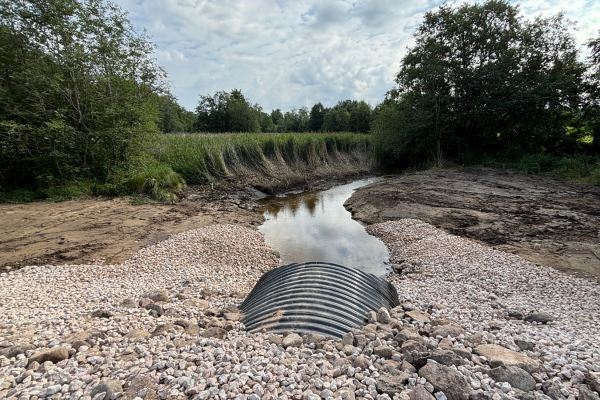
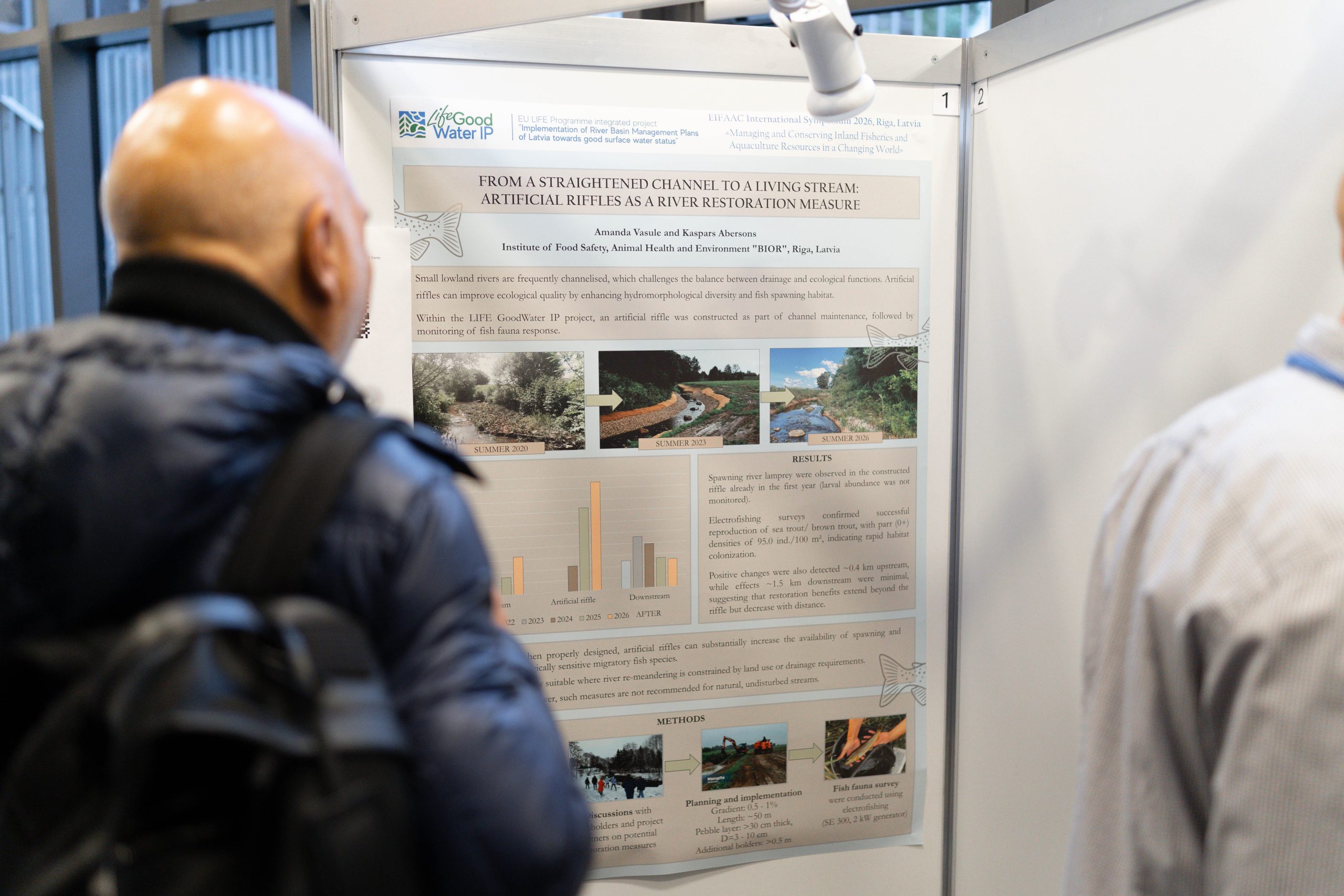
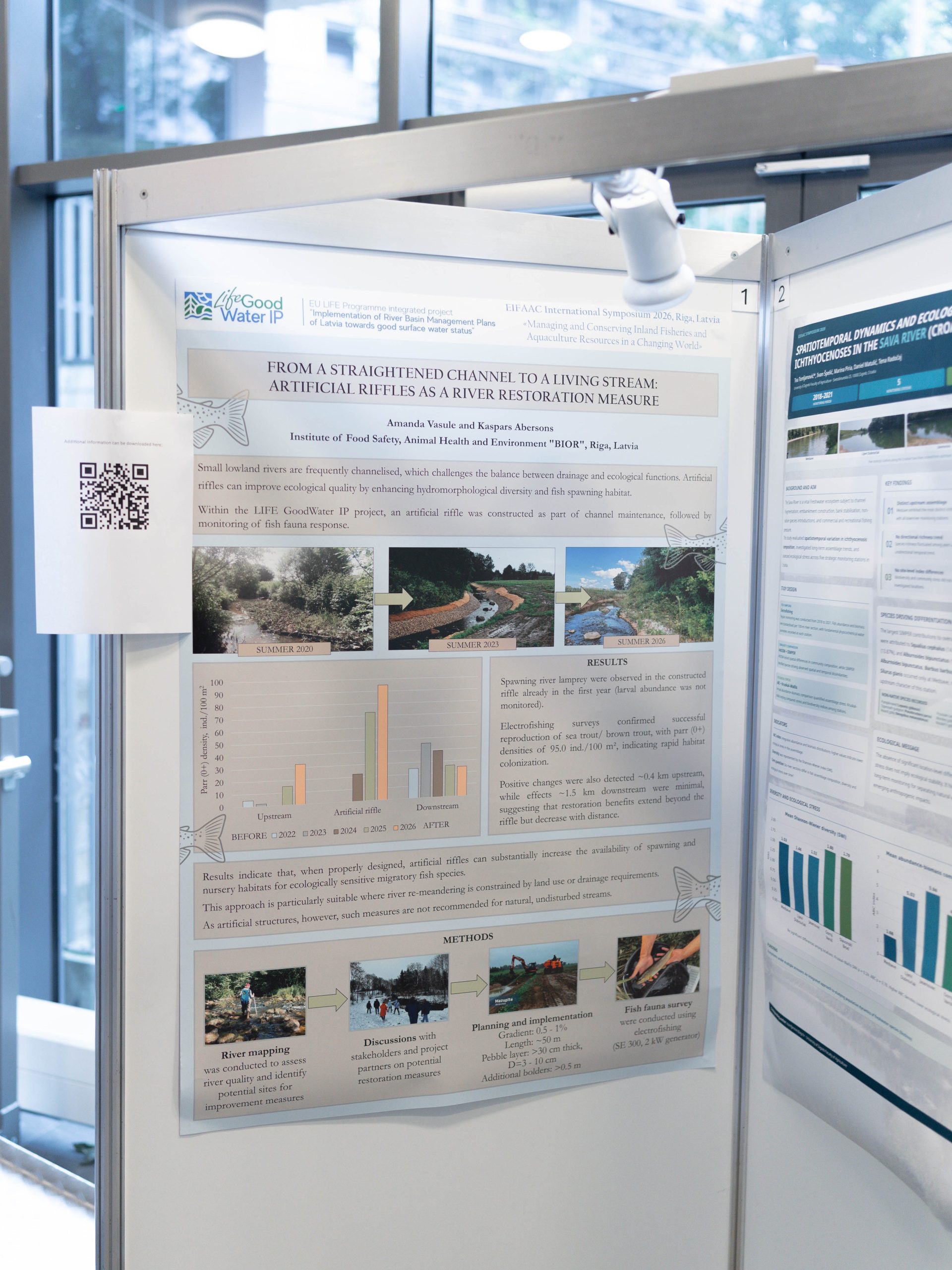
Amanda Vasule (BIOR) presented the poster “From a Straightened Channel to a Living Stream: Artificial Riffles as a River Restoration Measure”, co-authored by Kaspars Abersons (BIOR). The study examined artificial riffles constructed in the Mazupīte River in northern Latvia as part of LIFE GoodWater IP. The measures aimed to improve habitat diversity and create suitable spawning and nursery habitats while maintaining the river’s drainage capacity.
The first results are encouraging: European river lamprey were observed on the newly constructed riffles the following spring, while fish surveys in 2024 and 2025 recorded young trout, with densities reaching 22.4 and 72.8 individuals per 100 m², respectively.
The findings highlight the potential of carefully designed artificial riffles to improve habitats in straightened rivers, while also emphasizing the importance of preventing sediment accumulation and ensuring long-term habitat stability.
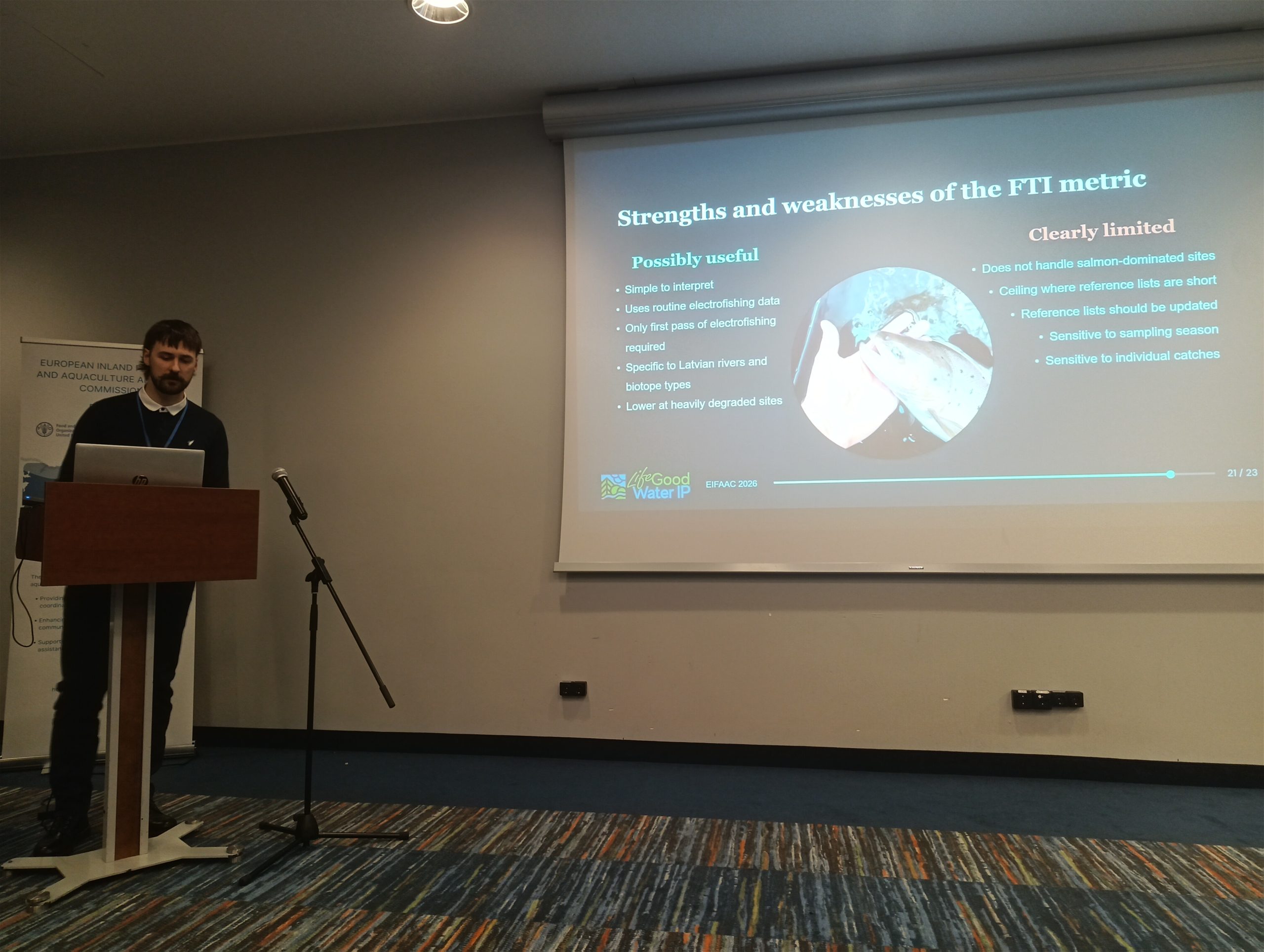
Ričards Kaupužs (BIOR) presented research on “Developing a Fish Fauna ‘Naturalness’ Metric for Evaluating River Restoration Success in Latvia”, co-authored by Kaspars Abersons (BIOR), Amanda Vasule (BIOR) and Jolanta Jēkabsone (Latvian Environment, Geology and Meteorology Centre).
The research introduced a new index that assesses how closely observed fish communities resemble the fish assemblages expected under reference conditions for different river and habitat types.Tested at 16 sampling sites across four LIFE GoodWater IP rivers, the index showed higher average values in restored river reaches (0.70) than in non-restored sites (0.57). It also reflected differences in hydromorphological conditions, with the lowest average values recorded in heavily modified reaches.
Although further refinement is needed, the preliminary results suggest that this metric could become a useful tool for evaluating river restoration success and supporting evidence-based river management.
Together, these studies demonstrate two complementary aspects of LIFE GoodWater IP: implementing practical habitat restoration measures and developing methods to evaluate their ecological effectiveness.